Azalea Flower Coloring Page and Book Review
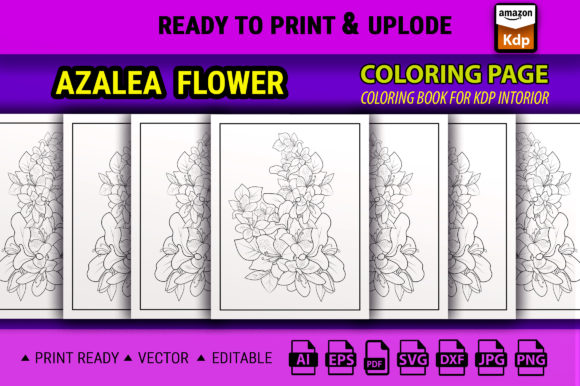
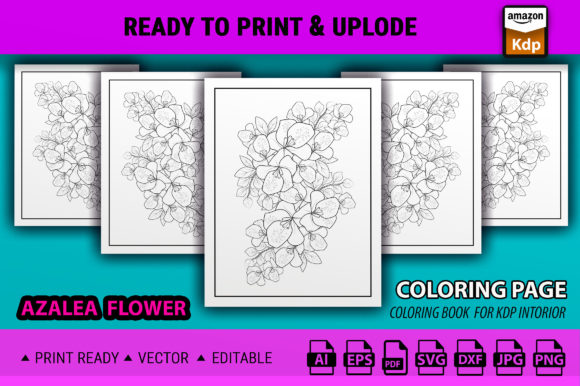
I first opened the Azalea Flower Coloring Page and Book with a specific mindset: not as a parent looking for a rainy-day activity, but as a designer who needs a clean, confident floral motif that can actually live on fabric. The azalea illustration has a soft, storybook charm—rounded petals, gentle curves, and a layout that feels intentionally balanced. It’s not a messy botanical sketch. The lines are deliberate, and that’s the first thing I notice when I’m sizing up a design for embroidery. If the base artwork already holds its own in black and white, it’s going to translate beautifully into thread.
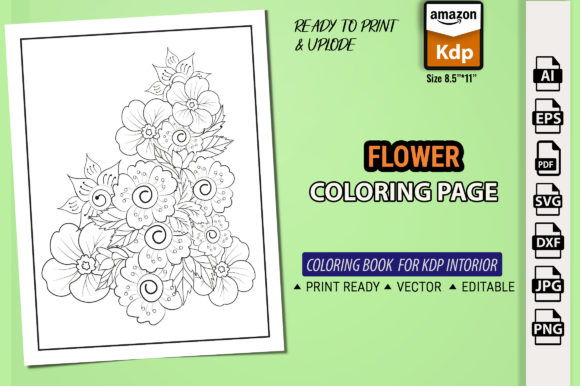
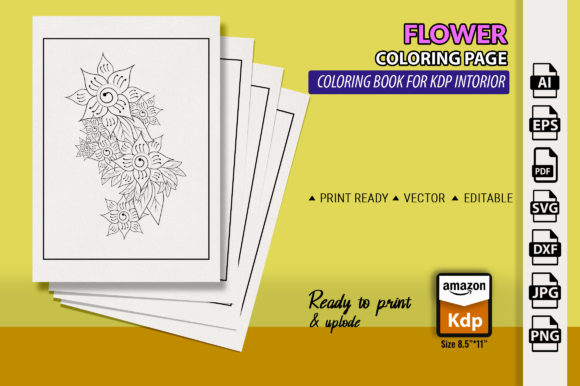
This particular piece comes from the Coloring Pages Amp world, originally a printable Graphics file for a KDP interior. The fact that it’s vector-based, built in Adobe Illustrator, and already sized at 8.5×11 inches gives me a lot of freedom. I can scale it down for a delicate pocket motif or keep it generous for a statement back panel. And because it’s a coloring page, the line weight is already consistent—something that digitizers pray for. When I’m prepping a design for a machine embroidery file, I’m not looking for shading or gradients. I’m looking for a path I can trust. This one has that.
The Mood of the Azalea: Gentle, Nostalgic, and Market-Ready
The personality of this azalea design leans toward soft, thoughtful, and slightly vintage. It would feel at home on a linen tea towel, a baby’s knit blanket, or a lightweight spring tote. It doesn’t shout. It speaks. That’s the kind of energy that works well for a handmade product line where the goal is to make someone feel cared for, not just decorated. The petals cluster in a way that reads clearly from a short distance, and the negative space inside the design keeps it from feeling cluttered. In embroidery, that negative space is gold—fewer dense fills, less puckering, and a faster stitch-out.
I immediately pictured this as a centerpiece for a custom applique design. The outer petal shapes are distinct enough to be cut from fabric, and the interior lines could be rendered with a fine satin stitch or even a simple running stitch for a sketch-like effect. That versatility is exactly what I need when I’m building a cohesive collection for a boutique or a craft fair. One design, multiple applications.
A Real-Life Scenario: The Spring Tote Bag Test
Let me walk you through a real project. I’m putting together a small batch of canvas tote bags for a spring market. The theme is “garden-fresh,” and I want a floral that feels personal, not generic. I pull the Azalea Flower Coloring Page and Book artwork into my embroidery software, resize it to about 5 inches wide, and map out the stitch types. I decide on a soft coral thread for the petals, a muted sage green for the leaves, and a dark charcoal outline to keep the coloring-book soul intact. I run a test on a medium-weight cotton canvas with a medium-weight cutaway stabilizer. The result is clean, legible, and full of character. The design doesn’t fight the fabric. It settles into it.
That’s the moment I know this is a keeper. The azalea doesn’t lose its identity when stitched. The curves stay graceful. The center of the flower holds its shape without turning into a dense blob. For a tote bag that will be carried, set down, and folded, the design needs to be durable. By keeping the stitch density moderate and the pathing efficient, I ended up with a finished product that looks high-end and feels soft to the touch. No stiffness, no thread breaks. Exactly what a customer would expect from a $40 handmade tote.
How This Design Holds Up Across Different Embroidery Projects
I don’t use a design just once. I test it mentally across a dozen product types before I commit. Here’s how the Azalea Flower Coloring Page and Book performs in the real world:
- Custom apparel: On a light sweatshirt or a cotton tee, the azalea creates a subtle, artistic focal point. I’d avoid extremely dark fabrics unless I’m using a bold thread that contrasts well, because the delicate petal lines can get lost. A soft cream or heather grey sweater is ideal.
- Baby and children’s items: This is where the coloring book origin truly shines. A small version on a baby onesie or a nursery pillow cover reads as innocent, not infantile. It’s charming without being cartoonish. Use a soft fill stitch for the petals and skip the outline on the tiniest parts to keep it gentle against delicate skin.
- Patches and caps: I’m careful here. The azalea’s rounded petals are forgiving, but the center detail might be too fine for a dense patch under 3 inches. On a cap, the curved surface could distort the outer petals slightly. I’d test it on a flat area first, or simplify the very center for a low-profile patch.
- Kitchen linens and tea towels: This is a sweet spot. A single azalea in one corner of a flour-sack towel, stitched in a single color, is a bestseller waiting to happen. The design breathes easily, and the towel remains functional.
- Pillow covers and home decor: For a 16-inch pillow, I’d enlarge the design to about 8 inches and use a linen-textured fabric. The stitching becomes a tactile element, and the azalea’s open areas keep the pillow from feeling like a solid block of embroidery.
- Personalized gifts: Adding a name or a short date beneath the azalea turns it into a wedding gift, a Mother’s Day present, or a housewarming token. The design’s simplicity leaves room for meaningful customization without overcrowding.
Where Caution Is Necessary
No design is flawless, and it’s my job to point out the edges. The Azalea Flower Coloring Page and Book does have a few areas that need a light touch. The internal petal curves and the small stamen-like details are beautiful in a coloring book, but in embroidery, they can become dense trouble spots if you’re not careful. I always recommend testing the design on the exact fabric you plan to sell. If you’re using a knit or a loosely woven fabric, those tiny lines might pull or distort. A good cutaway stabilizer is non-negotiable. I also avoid hooping this design too tightly; let the fabric relax so the blossom doesn’t pucker.
On textured fabrics like terry cloth or thick fleece, the fine lines can sink in and disappear. That’s not a fault of the design—it’s a mismatch of medium. I’d reserve this azalea for smooth, stable surfaces. And if you’re thinking of a cap, consider removing the very center detail and relying on a simpler stitch for the flower’s core. Small hoop sizes (under 4×4 inches) will force you to shrink the artwork significantly, and at that scale, the petals might start to merge. I’d keep the design above 3.5 inches wide for the best stitch clarity.
Also, if you’re planning to sell finished items or digital embroidery files, you need to know the licensing situation. The product description says it’s a KDP interior, and vector files are included. But that doesn’t automatically grant commercial embroidery rights. As a designer, I always check the extended license or contact the creator before selling the design in a digitized format. Never assume.
Visual Appeal, Stitch Clarity, and Customer Trust
An embroidery design is a promise. When a customer sees a listing photo, they’re imagining that item in their life. The Azalea Flower Coloring Page and Book has a high promise score. The shape is instantly recognizable as a flower, and the azalea carries a specific garden-club nostalgia that resonates with a broad audience. It’s not a generic daisy. It’s a specific bloom, and specificity sells. I’ve noticed that buyers respond to embroidery that feels intentional, not mass-produced. This design delivers that.
Stitch clarity is strong because the original artwork is line-based. When I digitize it, I can follow the paths exactly. There’s no guesswork about where a petal ends and a leaf begins. That clarity translates to a professional finished product. It also reduces the number of test runs I need to waste. For a small shop owner, that’s money saved. For a handmade seller, it’s confidence in every order.
From a branding perspective, this azalea helps me build a consistent visual story. I can use it across tote bags, tea towels, and greeting card inserts, and it ties the collection together. It’s recognizable, and repeat customers start to associate that azalea with my shop. That’s the kind of quiet branding that builds loyalty. And giftability? A crisp azalea on a linen pillow cover is a gift that feels curated, not last-minute.
Practical Embroidery Designer Notes
Before you go all-in on this design, here’s the checklist I run through every time I use a new graphic like this one:
- Test on scrap fabric first. I use the same fabric and stabilizer combination I plan to sell. The first stitch-out is never for a customer.
- Check thread color contrast. The azalea’s lines are delicate, so if your thread color is too close to the fabric, the design disappears. A mockup in black and white helps me see if the contrast is strong enough.
- Review stitch density. I often reduce the density slightly for the inner lines to keep the fabric soft. The original vector lines are thin, and a dense satin stitch can make them blocky.
- Confirm hoop size. The source file is 8.5×11 inches, but that’s paper size. I resize to fit a 5×7 or 6×10 hoop for most projects. Always check the actual stitchable area.
- Inspect small details. The center of the flower has tiny shapes. I might simplify them for a 4-inch version or convert them to a single running stitch.
- Test on light and dark backgrounds. A design that looks crisp on unbleached cotton might vanish on a charcoal tee. I always test both extremes.
- Use proper stabilizer. For totes, a cutaway. For towels, a water-soluble topper. Don’t skip this step.
- Check licensing. The product is a digital printable for coloring books. If I want to sell embroidered items, I verify that commercial use is allowed. If I’m selling the digitized embroidery file, I double-check the terms. Many graphics are for personal use only until you upgrade.
I also keep a log of stitch-outs with notes on thread changes and any adjustments. Over time, that log becomes a valuable asset for my small business. It lets me replicate the exact look for future orders, and it saves me from reinventing the wheel when a customer asks for a custom colorway.
The Azalea Flower Coloring Page and Book has earned a permanent spot in my design library. It’s not a one-hit wonder. It’s a workhorse that can adapt from a simple tea towel to a detailed pillow cover, all while maintaining that hand-drawn charm. In a world of over-complicated embroidery files, this one reminds me that sometimes the best starting point is a clean, thoughtful line drawing. Whether you’re a seasoned digitizer or a craft business owner looking for your next signature motif, this azalea is worth the time to test, tweak, and treasure.