A Design Review of the Bear Coloring Page
When you’re scrolling through digital design assets for your next embroidery project, you develop a quick eye for what translates well from screen to stitch. The so-called Bear Coloring Page for Adults or Kids lands somewhere in that vast and useful category of simple, illustrative graphics. It’s not a specialized embroidery file, but as a designer who often sources from this pool, I see its potential for handmade goods. Let’s talk about what it feels like and where it works.
The Personality and Practical Mood of This Bear
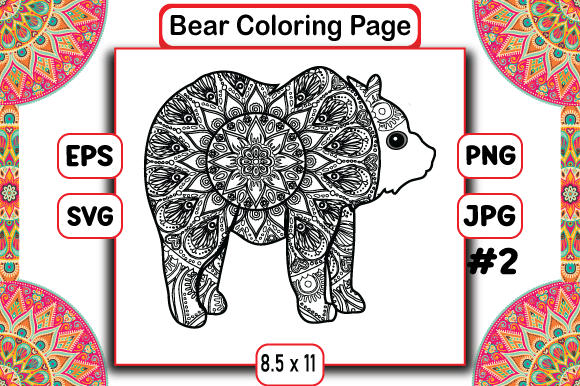
The first thing you notice is the friendly, approachable vibe. This isn’t a hyper-detailed, realistic bear portrait; it’s an outline with a charming, almost storybook character. The layout is typically centered and balanced, making it a reliable choice for a straightforward, single-element embroidery project. It creates a mood of warmth and innocence, leaning towards gifts, kids' items, or cozy, personal products. For embroidery, this means the design’s personality is defined more by your stitch choices and thread colors than by intricate details in the graphic itself.
That’s actually a benefit. As an illustrative outline, it gives you, the maker, creative control. You can interpret it as a simple running stitch outline for a minimalist look on a tea towel, or go bold with satin stitches and fill stitches for a plush, textured bear on a baby blanket. The visual personality is malleable, which is perfect for matching your brand’s style or a client’s specific request.
Where This Bear Finds Its Home in Embroidery
I immediately picture this on a custom tote bag for a nature-loving friend. It’s a great size for a statement piece on bag fabric, and the friendly design would make the bag feel personal and special. For a small business focusing on personalized gifts, this bear could be a staple. Stitched onto the corner of a linen pillow cover, it adds a touch of handmade charm without overwhelming the piece. On a child’s sweatshirt or a baby’s romper, it’s safe, sweet, and universally appealing.
Consider also its role in embroidered patches. This bear outline is ideal for a patch applique design. You could stitch it onto a denim jacket or a backpack as a standalone accent. For holiday embroidery, maybe on a kitchen towel as part of a “cozy cabin” gift set, it fits perfectly. For an Etsy seller creating a line of nursery decor, this bear could be the centerpiece of a hoop art piece or a blanket corner. The simplicity makes it adaptable across many products, from boutique merchandise to craft fair offerings.
Scenarios Where Careful Testing is Key
While the design is versatile, its success depends entirely on your execution. On dark fabric, the outline needs to be crisp and bold; you’ll need to choose thread colors with high contrast. On stretchy fabric like t-shirts, you must use proper stabilizer to prevent distortion of those smooth, curved lines.
Small details are the main consideration here. If the graphic has any tiny interior lines or tight corners, they might not stitch cleanly at a very small hoop size. Always test the design on scrap fabric first. I’d avoid using it on items with highly textured fabrics where the outline could get lost, or on curved surfaces like caps unless you’ve confirmed the digitized file (if you’re converting it) scales and curves well. For products needing frequent washing, like apparel, ensure your stitch density is secure so the design holds up.
The Impact on Your Product and Your Customer
Using a design like this effectively boosts visual appeal through craftsmanship. The stitching clarity you achieve will directly affect the product’s perceived value. A clean, well-executed bear on a tote bag feels premium; a messy, puckered one feels amateur. This influences customer trust and your brand’s professionalism.
For giftability, this bear scores high. It’s non-specific, heartwarming, and feels handmade. That personal touch is what buyers on platforms like Etsy are seeking. It also aids in brand consistency if you develop a line of animal-themed embroidered goods; it becomes a recognizable part of your shop’s aesthetic. When customers see a cohesive style, their engagement and loyalty increase.
Practical Notes for the Embroidery Designer
Since this is provided as a coloring page graphic, remember it’s not a pre-digitized embroidery file. You or your digitizer will need to convert the EPS, SVG, PNG, or JPG into a usable embroidery format. Before any production, check the licensing clearly to confirm it’s suitable for both personal and commercial projects.
My routine advice applies strongly here:
- Test stitch on light and dark background scraps to judge contrast.
- Review the stitch density in your digitized version—too dense can stiffen fabric; too light can look sparse.
- Inspect how small details like the bear’s eyes or nose translate at your intended hoop size.
- Use printable mockups for your digital product previews or listings to show the potential.
- Consider how it would look as both an outline and a filled design to offer product variations.
Ultimately, the Bear Coloring Page for Adults or Kids is a solid, versatile graphic asset. Its true value in embroidery isn’t in the file itself, but in how you, the maker, bring it to life with thread and fabric. It’s a blank canvas waiting for your stitch, perfect for turning into a cherished custom apparel item, a heartfelt holiday gift, or a bestselling product in your small shop. Approach it with a practical eye, test thoroughly, and it can become a reliable part of your embroidery project toolkit.