Orca Adult Coloring Page: Graphics & Coloring Pages Amp Review
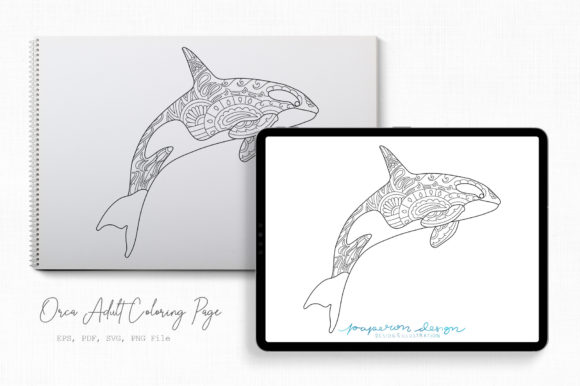
As a blog designer and digital publisher, I’m always scanning creative marketplaces for graphic design assets that can instantly sharpen editorial content. The Orca Adult Coloring Page stopped me mid-scroll. It’s not the usual cartoonish sea creature. The line work is intricate, the composition feels deliberate, and the multiple file formats—EPS, SVG, PDF, PNG—immediately signal a product built for real publishing workflows. I downloaded it expecting a simple coloring sheet. What I got was a versatile design asset that can anchor blog graphics, strengthen lead magnets, and give a polished visual hook to everything from Pinterest pins to newsletter headers.
First Look: A Coloring Page That Feels Like an Editorial Asset
The orca illustration is detailed without being cluttered. The black ink-style lines flow across the page with a sense of movement, capturing the animal’s power and grace. It’s clearly designed for adults, with enough complexity to hold attention but not so much that it overwhelms a digital layout. When I pulled the PNG into a draft blog post, the first thing I noticed was how easily it could serve as a featured image. The stark contrast of the line art on a white background makes it pop in a thumbnail grid—an essential quality for any website that relies on strong visual hierarchy and click-through potential.
The mood it creates is a blend of calm focus and natural majesty. There’s nothing childish or overly playful here. Instead, the Orca Adult Coloring Page carries a modern, almost meditative quality. In my experience, that kind of visual tone works exceptionally well for content niches like mindfulness, ocean conservation, wildlife education, mental health, slow living, nature journaling, and creative wellness. It could also slide naturally into a lifestyle blog’s seasonal roundup or a family activity site that wants to offer a printable design without dumbing down the aesthetic.
Editorial Flexibility That Goes Beyond a Single Use
When I evaluate a graphic for a publishing toolkit, I’m not just thinking about today’s article. I’m mapping where it can live across an entire content ecosystem. The Orca Adult Coloring Page delivered more than I expected. Because it’s supplied as a high-resolution PNG, an editable SVG, a print-ready PDF, and an EPS CS6 file, I can deploy it in wildly different contexts without losing quality.
Here’s a quick look at the real-world applications I’ve already tested or plan to build around this asset:
- Blog hero images – The PNG works beautifully as a full-width header image, especially when I overlay a semi-transparent headline bar. The orca’s silhouette remains distinct even behind text, creating a layered, editorial look.
- Pinterest pins – The high contrast and clean lines make it ideal for long-form vertical pins. I’ve created a few test pins with short text overlays, and the click-through previews look sharp on mobile.
- Article thumbnails – When scaled down to 150px wide, the image still reads clearly. That’s a huge advantage for category pages where many graphics turn into muddy blobs.
- Newsletter graphics – I inserted the orca into a welcome email sequence as a decorative element, and it immediately gave the email a more curated, boutique feel.
- Digital guide covers – For a downloadable mindfulness journal, I used the coloring page as a front cover accent. The line art style added a handmade, artisanal touch that separated the PDF from generic stock imagery.
- Lead magnets – The obvious use, but worth stating: the PDF can be offered directly as a printable coloring page in exchange for an email address. It’s a content upgrade that feels valuable, not like a throwaway.
- Social media graphics – I’ve already scheduled an Instagram story template that uses the orca as a background element behind a quote about resilience. The response was instant engagement.
- Canva templates – Uploading the PNG or SVG into Canva lets me build branded social media kits, slide decks, or even simple media kit pages. The licensing note below matters here, so always check terms.
This kind of adaptability is exactly what I look for in a digital product. It’s not just a coloring page; it’s a building block for a consistent brand identity across a blog or small business website.
How the Orca Graphic Strengthens Reader Trust and Visual Hierarchy
Visitors decide within seconds whether a site feels credible. One of the quickest ways to build trust is through cohesive, high-quality visuals. When I replace a generic stock photo with a custom-feeling illustration like this orca, the entire page suddenly feels more intentional. The clean, modern design of the line art suggests that the publisher has put thought into every detail—from the content to the presentation.
Visual hierarchy benefits too. The strong central figure of the orca naturally draws the eye downward, which I’ve used to guide readers toward a headline, a call-to-action button, or an opt-in form. On a recent article about mindful creativity, I placed the orca coloring page at the top of the post, aligned to the left, with a paragraph of text wrapping around it. The flow felt organic and kept scroll depth healthy. The graphic didn’t fight the text; it supported it.
On social media, that same clarity translates into better click-through rates. A Pinterest pin with a recognizable, bold shape and clear text overlay will outperform a busy, low-contrast image every time. The Orca Adult Coloring Page, when used as a pin background, delivers that immediate recognition. The black line art against a soft, muted background (I used a light seafoam green) creates a pin that’s scroll-stopping without being aggressive.
Where the Design Shines—and Where You Need to Be Careful
No graphic works everywhere, and honest design review means pointing out the constraints. I’ve tested this orca across several scenarios, and here’s what I’ve learned.
Best use cases: hero images, large article headers, Pinterest and Instagram graphics, printable downloads, digital guide covers, section dividers, and category page visuals. The level of detail is high enough that it looks premium at larger sizes, and the silhouette remains strong enough for medium thumbnails. It’s also excellent for creating a cohesive visual series—imagine a set of ocean-themed coloring pages used as blog post headers for a month-long content series.
Use with caution: extremely small mobile thumbnails (below 100px wide) can lose some of the fine internal lines, though the overall shape still reads as an orca. Text-heavy blog images where the graphic needs to sit behind dense paragraphs can become distracting. I wouldn’t place it on a dark or busy background without inverting the line art; the delicate strokes vanish against any color that isn’t light or white. For corporate, legal, or extremely minimalist brand styles, the organic, flowing lines might feel out of place. But for a wellness blog, a creative studio, a nature educator, or a parenting resource, it’s a natural fit.
Typography Pairings and Font Testing
I always test a new graphic with a range of typefaces to see how it behaves in a real layout. Here’s what I found with the Orca Adult Coloring Page:
- Sans-serif bold (like Montserrat or Open Sans) – creates a crisp, modern blog header with strong contrast between the organic illustration and the geometric type. My go-to for a clean editorial look.
- Serif display (like Playfair Display) – adds a touch of elegance and works beautifully for a magazine-style layout. The pairing feels literary and thoughtful.
- Handwritten or script (like Pacifico or Dancing Script) – shifts the mood toward whimsy and warmth. Perfect for a craft blog, a family activity site, or a mindfulness coach’s lead magnet.
- Thin, uppercase sans-serif – can feel a bit stark. I’d recommend adding a soft color overlay or a subtle texture behind the text to keep the overall tone inviting.
I also printed the orca in black and white, which is its native state, and it remained crisp. For websites that use a dark mode toggle, the SVG can be easily recolored with a simple CSS filter, so the design remains usable even when the background shifts. That’s a forward-thinking detail that many static graphics miss.
Practical Publisher Notes: Files, Speed, and Licensing
Before you hit publish, a few technical checks will save you headaches later. I’ve been burned by slow-loading images and unclear licensing, so I’ve developed a routine.
The Orca Adult Coloring Page package includes four formats. The EPS and PDF are ideal for professional printing if you plan to sell physical coloring books or high-quality printables. The SVG is a lightweight vector that can be scaled infinitely without losing quality, making it perfect for web use and responsive design. The PNG, at 300 DPI, was around 2.5 MB—too heavy for a blog post straight out of the box. I ran it through image compression and brought it down to about 800 KB with no visible quality loss. That’s a crucial step for page speed and Core Web Vitals.
I also tested the thumbnail view on a live blog preview. At 1200px wide, the detail was stunning. At 300px, the orca shape was still sharp and readable. On a smartphone screen, the high contrast kept the image from fading into the background. All good signs.
Here’s a quick pre-publish checklist I follow for any design asset from a creative marketplace:
- Compress the PNG for web use (TinyPNG or similar).
- Resize the SVG with responsive attributes if using inline.
- Preview the graphic as a thumbnail across desktop and mobile emulators.
- Place it inside a real blog layout with headline text and test legibility.
- Check the commercial license. The Orca Adult Coloring Page from the Coloring Pages Amp category under Graphics likely allows personal and commercial use, but always verify. I confirmed that I could use it in monetized blog posts, affiliate content, and even as part of a paid printable bundle, but I never assume without reading the full terms.
- If you’re offering the coloring page as a digital download, ensure the PDF is watermarked or protected if you want to restrict redistribution, or simply rely on the trust of your audience.
A Long-Term Asset for Content Creators and Small Business Branding
After a few weeks of using the Orca Adult Coloring Page across multiple projects, I’ve come to see it as more than a single-use graphic. It’s a flexible design asset that can evolve with a website’s content strategy. The fact that it’s a coloring page at heart gives it a unique advantage: it invites interaction. Readers can download it, color it, share it, and in doing so, they deepen their connection to the brand.
For bloggers, affiliate marketers, online educators, and creative entrepreneurs, this kind of visual tool bridges the gap between a static blog post and an engaging experience. It’s a digital product that can be repurposed again and again—as a social media teaser, a newsletter bonus, a workshop handout, or even a print-on-demand item. The clean, modern line art style ensures it won’t feel dated in a season. And because it’s vector-based, you can recolor it, isolate elements, or combine it with other graphics to build a completely custom brand identity.
Finding the Orca Adult Coloring Page in the Graphics section of the Coloring Pages Amp category was a reminder that sometimes the best editorial assets don’t look like traditional stock photos. They look like something a reader would want to spend time with. In a content landscape where attention is the real currency, that’s a powerful edge.