Daisy-Garbara Daisy Flower Coloring Pages Amp Graphics
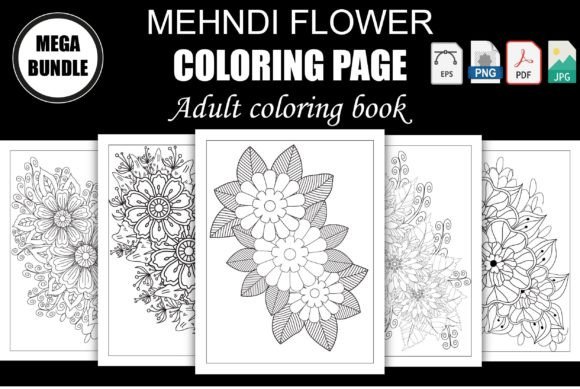
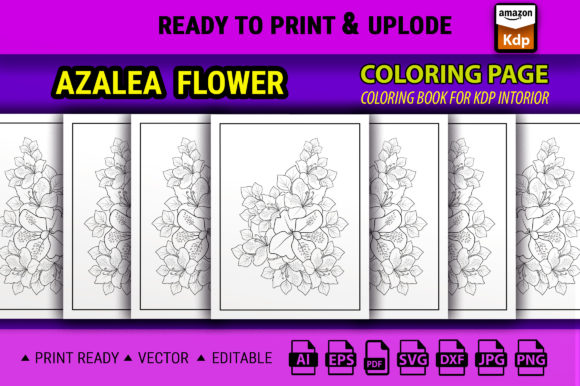
Unzipping the folder for the first time, I immediately scanned the file structure. The Daisy-garbara Daisy Flower Coloring Page asset lands as a clean, vector-based set ready for commercial use. It carries a soft, playful floral mood that feels neither overly childish nor rigidly formal. The daisy motif, drawn with generous open spaces and gentle curves, signals a niche that works well for kid-friendly creative products, yet it holds enough decorative charm for adult coloring enthusiasts and printable decor buyers. The overall impression is a cheerful, approachable botanical illustration that can flex into multiple digital product categories without feeling out of place.
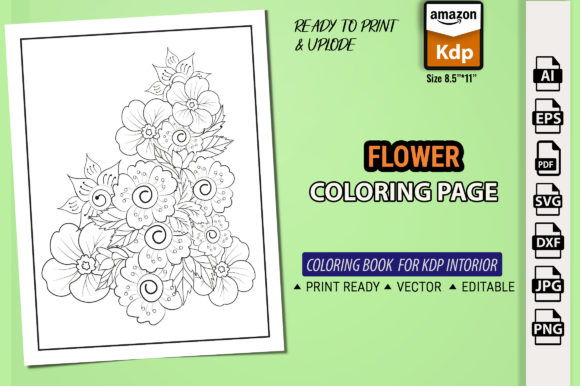
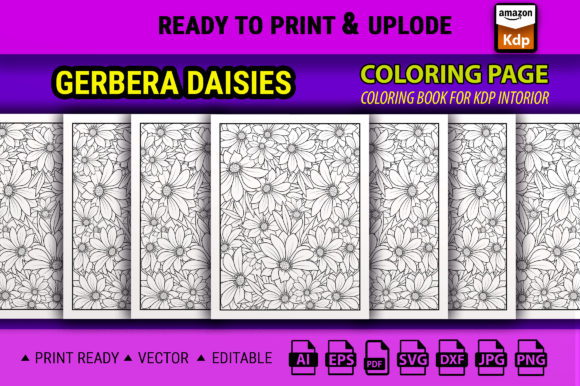
For online sellers, the first question is always about real-world application. This asset, originally described as a digital printable Flowers Coloring Book For Kids KDP Interior built in vector Adobe Illustrator, fits neatly into a broad range of sellable formats. The 8.5×11 inch size is a standard that makes it immediately usable for print-on-demand workbooks, Etsy activity sheets, and KDP interiors. The vector backbone means edges stay crisp at any scale, and the inclusion of multiple file types gives sellers the flexibility to integrate it into raster or vector workflows without frustrating conversions.
First Impressions and the Mood It Creates
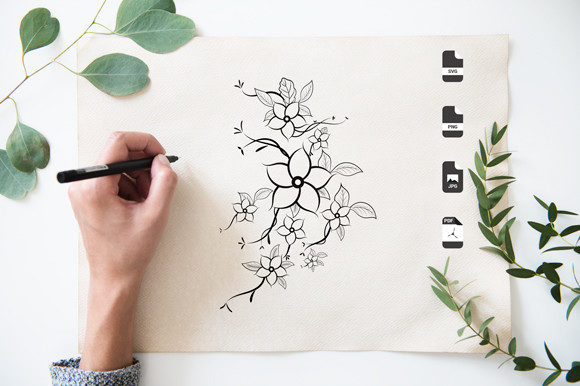
The visual personality of the daisy design leans toward the cheerful, uncluttered, and slightly rustic. The petals are bold and unfussy, making the page feel welcoming rather than intricate. That kind of graphic design asset appeals to a buyer who values a clean, stress-free coloring experience—perfect for a children’s activity page, a mindfulness adult coloring sheet, or a printable greeting card with a floral twist. When I tested it on a white mockup background, the black outlines popped with enough contrast to look inviting in a thumbnail preview. On a pastel or kraft paper background, the daisy silhouette took on a more handmade, crafty vibe that could easily suit a scrapbooking kit or a Cricut project.
This daisy design does not carry the elaborate, detailed linework of a premium adult coloring page, and that’s an advantage for certain product types. It sits comfortably in the space between a simple kid’s coloring sheet and a decorative botanical clipart. The large open petals give room for broad color blocking, making it a safe choice for younger children or for sublimation crafts where thick, bold outlines translate well onto fabric and hard goods.
How the Asset Fits Real Product-Selling Scenarios
When I evaluate a commercial design, I map it against the specific products I know sell consistently across marketplaces. The Daisy-garbara Daisy Flower Coloring Page is not a full bundle, but a single page that can be multiplied into many uses. Here is where I see it delivering the most value:
- Printable coloring books: Use it as a standalone page in a larger floral coloring pack, or as the cornerstone of a daisy-themed KDP interior. The 8.5×11 ratio eliminates the need for resizing before upload.
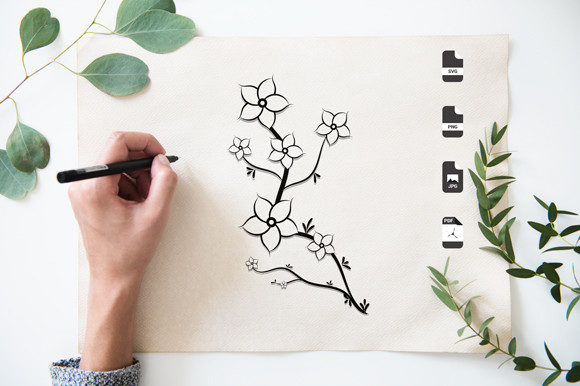
- SVG design for Cricut and Silhouette: Convert the vector outlines into a cut file for a paper flower project, a tote bag heat transfer, or a stencil. The clean, continuous lines simplify the cutting process.
- PNG clipart for card making: Isolate the flower as a transparent PNG and drop it into a Canva template for a birthday invitation, a thank-you card, or a nursery print. The daisy silhouette carries a universal, gender-neutral appeal.
- Sublimation designs: Print the outline or a filled version onto a mug, a tumbler wrap, or a t-shirt graphic. The bold lines hold up well under heat press transfer, and the open spaces allow for a vibrant color fill without bleeding.
- Planner stickers and scrapbooking: Resize the flower into a smaller dimension and print it as a sticker sheet. The simple shape makes it easy to cut by hand or with a die-cut machine.
- Printable wall art: Offer a “color your own” poster or a pre-colored, soft pastel version for a nursery or kids’ room decor. The daisy motif is timeless and avoids trend-driven designs that quickly become dated.
How It Elevates Product Presentation
Beyond the product itself, the way a design asset behaves in mockup previews and listing images determines whether a customer clicks through. I tested the daisy page as a thumbnail on a laptop screen and a mobile device. The generous white space around the flower makes the image readable even at a small size. The shape is recognizable, and the simple composition creates a strong focal point. For a listing that needs to convey “floral coloring fun” in under a second, this asset performs without requiring extensive text overlays or busy backgrounds.
In a product bundle, the Daisy-garbara Daisy Flower Coloring Page can also serve as a hero image. If I were building a seasonal digital download collection around spring, gardening, or Mother’s Day, I would place this daisy design prominently in the first mockup to anchor the bundle’s theme. The visual consistency it offers—a single, clean flower—helps build brand cohesion across a shop. When customers see a cohesive aesthetic, they perceive higher value and are more likely to trust the seller.
Where the Asset Works Best
I always test a new graphic in the contexts where it will be displayed most often. This daisy design truly shines in:
- Large product previews: The spacious layout gives the image room to breathe, so it looks professional even when scaled to fit a full-page mockup.
- Themed bundles: Pair it with other floral, botanical, or spring-themed graphics to create a cohesive digital download pack.
- Decorative print layouts: Use it as a full-page coloring sheet, a journal insert, or a frame-ready art print.
- Social media promos: The bold, simple shape holds attention in a feed, and the high-contrast line art invites engagement.
- Product mockups: Drop it into a coloring book mockup, a mug mockup, or a tote bag preview to show buyers exactly how the finished item will look.
Where to Use It Carefully
Not every design asset translates perfectly to every product type. Here are the scenarios where I would pause and test thoroughly before committing:
- Tiny sticker details: If you shrink the daisy down to a 1-inch sticker, the petal gaps may become too narrow for clean cutting. Always do a test cut on your Cricut or Silhouette before bundling a sticker sheet.
- Overly complex layouts: The simplicity of the design can get lost if you layer it with too many other elements. Keep the focus on the flower.
- Low-resolution print products: While the vector source is scalable, if you accidentally export a low-resolution PNG, the lines will pixelate. Always check your export settings.
- Dark backgrounds: The black outlines are designed for a light or white background. On a dark background, you may need to invert the line color or add a white fill to maintain visibility.
- Text-heavy templates: If you place this in a Canva template with multiple text blocks, the flower may compete for attention. Use it as a decorative accent rather than a background layer.
- Products requiring ultra-fine cutting lines: For intricate Cricut projects, the thicker outlines of this design work better for heat transfer vinyl than for delicate paper lace cuts.
Practical Seller Notes for a Smooth Workflow
Before I ever list a product based on a new graphic design asset, I run through a checklist that saves me from costly mistakes. The Daisy-garbara Daisy Flower Coloring Page is no exception. Here is how I approach it:
- Test on real mockups: Drop the design into at least three different product mockups: a coloring book page, a mug, and a framed print. This reveals how the design interacts with different surfaces and lighting.
- Preview as a marketplace thumbnail: Shrink the image to the size of a typical Etsy search result thumbnail. Confirm the daisy is still recognizable and the title doesn’t crowd it.
- Check how it looks on white and dark backgrounds: Even if you plan to use it on white, test it on a kraft or black background. Sometimes a white fill is needed for dark surfaces.
- Test print colors: Print the page at home and at a local print shop. The black lines should be crisp, not muddy. If you plan to sell a pre-colored version, test the color accuracy on your printer.
- Verify PNG transparency: Open the PNG file in your design software and confirm the background is truly transparent. A stray white pixel can ruin a shirt mockup.
- Inspect SVG cut quality: Import the SVG into Cricut Design Space or Silhouette Studio. Check for open paths, unnecessary nodes, and odd cut lines. Simplify the path if needed.
- Confirm file resolution: The vector source guarantees infinite scaling, but any raster exports should be at least 300 DPI for print. For sublimation, you may need 600 DPI on certain substrates.
- Organize files clearly for customers: Name your folders logically: “PDF,” “SVG,” “PNG,” “AI.” Include a simple readme file with terms of use. A messy download folder reflects poorly on your brand.
- Pair with the right fonts: This daisy design pairs beautifully with a script font for a soft, feminine invitation, a serif font for a classic nursery print, a sans serif for a clean kids’ activity page, a handwritten font for a personal touch, and a display font for a bold title page. Test the combination before finalizing your listing.
- Confirm commercial licensing: Review the asset’s license carefully. Does it allow end products for sale on physical items? Can you use it in a POD workflow? Clarify these points to avoid copyright issues.
Integrating the Asset Into a Real Online Shop Setup
Imagine a seller preparing a spring collection for Etsy. They need a hero piece that can be quickly adapted into a coloring book, a set of mugs, and a few printable cards. The Daisy-garbara Daisy Flower Coloring Page becomes the anchor. They create a KDP interior with 20 daisy variations, a tumbler wrap featuring the outline filled with a watercolor texture, and a Canva wedding invitation template where the daisy acts as a subtle corner accent. The consistent floral language ties the entire shop together, making it feel curated rather than random.
For a print-on-demand creator, the vector file can be loaded into a sublimation print file for a tote bag, while the PNG version is placed onto a white t-shirt mockup. The bold lines ensure the design transfers cleanly without disappearing into the fabric. Because the design is not overly intricate, the production error rate stays low, and customer satisfaction stays high. This kind of reliability is what separates a practical commercial design from a beautiful but unusable graphic.
In the world of creative marketplaces, a single well-executed botanical illustration can carry an entire product line. The daisy is a classic, universally recognized motif that never falls out of demand. The Daisy-garbara Daisy Flower Coloring Page delivers that motif in a format that is ready to be monetized, provided you do the upfront testing. The asset is not a complete product by itself, but it is a solid foundation for a seller who understands how to build a coherent, marketable collection around a simple, cheerful flower.