Crab Adult Coloring Page: A Designer’s Embroidery Review
First Look at the Crab Adult Coloring Page
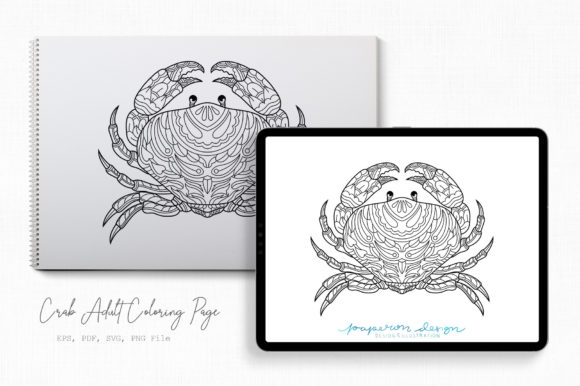
When I first opened the Crab Adult Coloring Page file, I knew immediately this was not just another generic seaside sketch. The shape language feels deliberate, the claw proportions have a satisfying balance, and the overall composition carries a relaxed coastal mood that works surprisingly well outside the coloring book world. As someone who regularly tests design assets for stitch-based projects, I look for clean linework, logical negative space, and a silhouette that reads clearly from a distance. This design checks those boxes.
The crab itself has a confident sideways stance, with legs that taper naturally and claws that hold visual weight without becoming clunky. There is a gentle rhythm to the shell segments, and the eye moves easily across the entire shape. That kind of flow matters when you start thinking about thread paths and satin stitch borders. A design that scans well as a flat graphic usually translates better into a stitched piece than one that relies on shading tricks or overly fine detail. The Crab Adult Coloring Page falls into the first category, which makes it a practical starting point for an embroidery project.
What This File Format Bundle Actually Offers
The product comes as EPS CS6, PDF, SVG, and PNG files. For embroidery makers, the SVG and EPS formats are the real workhorses here. You can pull them into digitizing software, scale the vector paths cleanly, and map out stitch types without pixelation headaches. The PNG gives you a quick preview layer to overlay on printable mockup templates, which is useful for listing photos or client approval rounds. I appreciate when a graphics pack includes both vector and raster options because it saves time switching between tools.
One thing to note right away is that these are coloring page files, not pre-digitized machine embroidery design formats. You will need to either digitize the design yourself or work with a digitizer who can interpret the artwork. That said, the linework is clean enough that tracing and converting to stitch paths should be straightforward. There are no muddy gradients or confusing overlaps to untangle, which keeps the digitizing process manageable even for intermediate users.
Where the Crab Motif Shines Brightest
I kept imagining this crab on a sturdy canvas tote bag while I studied the artwork. Picture a natural cotton tote with the crab centered in a warm terracotta or faded navy thread, the shell segments rendered in a light fill stitch with darker running stitch outlines. That kind of product would slot right into a summer craft fair booth or a coastal boutique shelf. The design has a relaxed, handmade personality that suits tote bag design work, kitchen towel embellishments, and casual pillow cover accents.
Another strong application is custom apparel, especially unisex sweatshirts and relaxed-fit t-shirts. The crab is not overly cute or cartoonish, so it appeals to adults who want a coastal nod without looking like they raided a children’s section. I could see this working on a weathered gray sweatshirt with the crab stitched small on the left chest, or blown up larger across the back. The shape holds up at multiple scales, which is a quality I always look for before committing to an embroidery file conversion.
For Etsy sellers and small shop owners, the crab theme also opens up seasonal opportunities. Summer collections, beach house merchandise, seafood restaurant branding, and vacation rental souvenir lines all have room for a well-executed crab motif. The design does not scream holiday, which means it can sell year-round in coastal markets rather than being locked into a two-month window.
Real-Life Scenario: The Beach Towel Project
Let me walk through a practical example. A client recently asked me to create a set of embroidered beach towels for a small inn on the Outer Banks. They wanted something that felt handcrafted but not overly rustic, sea-inspired but not cliché. I pulled up the Crab Adult Coloring Page SVG, scaled it to about seven inches wide, and mapped out a stitch plan on a looped terry towel blank.
The digitizing process took under an hour because the linework was so cooperative. I used a medium-weight satin stitch for the claw outlines, a lighter fill stitch for the shell segments, and kept the leg details as clean single-pass running stitch lines. On a textured towel surface, the simpler stitch choices held up better than anything dense or overly intricate. The finished towel looked intentional and professional, and the inn ordered eight more for the season. That is the kind of outcome I chase when evaluating a design asset for real use.
Fabric and Surface Considerations
Where should you pause before stitching this design? Let me share a few honest observations from my own testing. High-stretch fabrics like performance tees or thin jersey can distort the crab shape if the stabilizer is not dialed in perfectly. The legs spread out horizontally, and on a stretchy surface, you risk a wavy, uneven outline. Use a firm cutaway stabilizer and consider reducing the stitch density slightly so the fabric does not pucker around the claw tips.
Dark fabrics are another area to approach with care. The Crab Adult Coloring Page relies on clear outlines to define the shell details, and if your thread color blends too closely with a dark background, the segment lines can disappear. I recommend testing the design on a dark scrap with a contrasting thread, maybe a warm sand or coral tone, before committing to a final sweatshirt embroidery run. The same advice applies to textured fabrics like boucle or heavily napped fleece, where fine details can get swallowed.
For cap and hat applications, the wide horizontal spread of the crab body poses a challenge. The curved sewing field on a cap means the left and right claw tips may sit at different depths, which can affect registration. I would reduce the design width to under four inches and center it carefully on the front panel. On a flat cap or a bucket hat, the same design lays beautifully, so the product choice matters.
Commercial Use and Licensing Reality Check
Before you stitch this design onto a finished product for sale, take a moment to confirm the license terms. The product listing does not explicitly spell out commercial embroidery rights, and the category is Coloring Pages Amp under Graphics, which typically covers printable and digital use. If you plan to sell embroidered handmade product items, personalized gift pieces, or boutique product lines featuring this crab, contact the seller or platform to verify that stitched commercial use is covered. This is a step I never skip, even when a design looks perfect for a craft business launch.
The same caution applies if you intend to sell the digitized embroidery file itself. Converting a coloring page to a stitch file and reselling it as a digital product may require an extended license or explicit permission. A quick check now can save a headache later, especially for digital embroidery file shops and Etsy seller storefronts.
Stitch Planning and Technical Notes
When digitizing the Crab Adult Coloring Page, I found that a medium hoop size of five by seven inches was comfortable for a design scaled to about four inches wide. The claw details are pronounced enough that you can notch up the stitch width slightly without losing definition, but resist the urge to make every line thick. The legs benefit from a lighter touch, maybe a narrow satin or a doubled running stitch, so they do not overpower the shell.
Thread color selection is where this design really opens up. A monochromatic scheme in rust or coral feels classic and coastal, but I experimented with a two-tone approach using a warm cinnamon for the shell and a soft cream for the claw accents, and the contrast was striking. On a baby embroidery piece, pastel threads in aqua and peach turned the crab into a nursery-friendly motif without losing its character. Do a quick stitch-out on scrap fabric and look at the results under natural light before loading up a production run.
Stabilizer choice depends on the project. For towels and loosely woven textiles, a water-soluble topper paired with a medium cutaway backing prevents the stitches from sinking in. For structured bags and aprons, a single layer of tear-away stabilizer is usually enough. On embroidered patch projects, I use a heavy cutaway and a satin-stitch border around the entire crab shape to create a clean edge for cutting.
How the Design Affects Customer Perception
A crab motif carries a surprising amount of personality. It signals coastal ease, a bit of whimsy, and a connection to the water without being overly thematic. Buyers browsing handmade product listings react to that kind of subtle storytelling. A pillow cover with this crab stitched in a tonal thread reads as elevated and design-forward. A kitchen towel with the same crab in bright coral feels cheerful and giftable. The design adapts to the product context, which is a valuable trait for a small shop product line.
Giftability is another angle worth considering. The crab is not tied to a specific holiday, so it works for wedding gift accents, housewarming presents, hostess gifts, and holiday gift bundles that lean toward summer or beach themes. Pair an embroidered crab tea towel with a bag of local coffee or a handmade soap, and you have a cohesive, thoughtful gift set that looks far more expensive than the materials cost.
Final Practical Thoughts on the Crab Adult Coloring Page
After testing the Crab Adult Coloring Page across several fabric types and product applications, I can say it earns its place in a working designer’s resource folder. The artwork is clean, the mood is versatile, and the vector files make digitizing a smooth process. It is not a plug-and-play embroidery file, and anyone expecting to load it directly into a machine without digitizing will be disappointed, but for makers who already handle their own digitizing or work with a trusted digitizer, this is a solid starting point.
The design works best on medium-weight woven fabrics, relaxed apparel, and home textile projects. It handles scale changes well, maintains clarity across color palettes, and fits a surprising range of commercial embroidery and personal projects. Test it first, play with thread colors, and always double-check your licensing. If you approach it with the same care you would give any embroidery project, the results will speak for themselves.